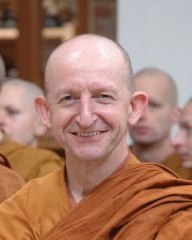
5. Context of “Teachings to Marjorie.” [Wat Pah Pong] [Ajahn Chah]
1. Story: Ajahn Amaro tells his mother that he’s never eaten so well since he became a Buddhist monk. [Ajahn Amaro] [Food] [Monastic life]
2. Story: Ajahn Chah’s early life. [Ajahn Chah] // [Culture/Thailand] [Truth] [Leadership] [Ajahn Jayasaro]
5. Story: Novice Chah disrobes at age 16. [Novices] [Disrobing] [Ajahn Chah] // [Sensual desire] [Restlessness and worry]
7. Story: Ajahn Chah ordains at age 20. [Ordination] [Ajahn Chah] // [Monastic life/Motivation] [Spiritual urgency] [Forest versus city monks]
4. Story: “Sleep is delicious.” [Admonishment/feedback] [Goodwill] [Ajahn Chah] // [Ajahn Amaro ] [Joseph Kappel] [Upatakh] [Wat Pah Nanachat] [Robes] [Mentoring] [Faith]
4. Stories about the people who criticized Chithurst Monastery in the early days. Told by Joseph Kappel and Ajahn Amaro. [Conflict] [Chithurst] // [Ajahn Sumedho] [Ajahn Anando] [Culture/West] [Communal harmony]
2. “Why did Ajahn Chah found Wat Pah Pong? [Inaudible question removed]” [Wat Pah Pong ] [History/Thai Buddhism] [Ajahn Chah] // [Tudong] [Teaching Dhamma] [Personal presence] [Seclusion] [Compassion] [Family] [Mutual lay/Saṅgha support]
Story: The first Rains Retreat with Ajahn Chah. [Rains retreat] [Devotion to wakefulness]
3. Question related to age and ordination (audio unclear). Answered by Ajahn Sumedho. [Ordination] [Older monks] [Ajahn Chah] // [Culture/Thailand] [Meditation] [Mae Chee] [Relationships] [Liberation] [Culture/West]
Story: A doctor ordains later in life. Told by Ajahn Amaro. [Health care]
4. Story: A hit man hired to kill Ajahn Chah ordains instead. [Crime] [Killing] [Ordination] [Ajahn Chah] // [Older monks]
5. Teachings hanging in the trees at Wat Pah Pong. [Wat Pah Pong] [Culture/Natural environment] [Teaching Dhamma]
4. Story: Ajahn Anando tries to heal Ajahn Chah. [Ajahn Anando] [Healing] [Ajahn Chah] // [Ajahn Sumedho] [Sickness] [Fierce/direct teaching]
6. Story: Ajahn Chah vows not to look at a woman for the duration of the Rains Retreat. [Determination] [Sensual desire] [Sense restraint] [Rains retreat] [Ajahn Chah] // [Discernment]
7. Story: Ajahn Chah hallucinates female sexual organs for ten days. [Sensual desire] [Mental illness] [Ajahn Chah] // [Ajahn Kinaree] [Posture/Walking] [Determination] [Patience] [Rebirth]
8. Story: When asked about the potential for sacred sexuality, Ajahn Chah picks his nose. [Sensual desire] [Fierce/direct teaching] [Ajahn Chah] // [Insight Meditation Society]
Quote: “There’s nothing more to it than that except what your mind adds to it.” — Ajahn Chah. [Proliferation]
3. Story: Ajahn Amaro hears of Master Hsuan Hua through Ajahn Sumedho. [Ajahn Amaro] [Master Hsuan Hua] [Ajahn Sumedho] // [Chithurst] [City of Ten Thousand Buddhas]
Quote: “I always thought I would never meet anyone else like Luang Por Chah, but I just met another one.” — Ajahn Sumedho. [Ajahn Chah]
4. Story: Ajahn Sumedho asks Ajahn Amaro to go to California. [Ajahn Sumedho] [Ajahn Amaro] // [Master Hsuan Hua] [Elders' Council] [City of Ten Thousand Buddhas] [Ordination] [Jack Kornfield]
5. Recollection: The virtual monastery in San Francisco. [Saṅghapāla] // [Ajahn Amaro]
6. Recollection: Ajahn Sumedho delays the opening of a San Francisco vihara in 1992. [Ajahn Amaro] [Ajahn Sumedho] // [Ajahn Chah] [Disrobing]
7. Story: The history of Abhayagiri Monastery: Master Hua offers land to Ajahn Sumedho the day after the Elders’ Council approves a land search. [Master Hsuan Hua] [Ajahn Sumedho] [Elders' Council] [Abhayagiri ] // [Saṅghapāla] [Gratitude] [Amaravati] [Ajahn Amaro] [Ajahn Vīradhammo] [Sickness]
Quote: “It had been the dream of my life to bring the Northern and Southern Traditions together again, and I never thought I was going to be able to do it until I met Sumedho.” — Master Hsuan Hua. [Mahāyāna] [Theravāda] [Communal harmony]
8. Testing times: Saṅghapāla Foundation scrambles to purchase the plot of land adjacent to Master Hsuan Hua’s gift. [Saṅghapāla] [Abhayagiri] // [Ajahn Amaro] [Faith]
9. Story: Moving onto the Abhayagiri land. [Abhayagiri] // [Ajahn Karuṇadhammo] [Ajahn Amaro] [Saṅghapāla] [Gratitude]
11. Recollection: Origins of the Abhayagiri co-abbotship. [Abbot] [Abhayagiri] // [Master Hsuan Hua] [Three Conditions Monastery] [Jealousy] [Ajahn Amaro] [Ajahn Pasanno] [Leadership]
Quote: “You can’t have two tigers living in the same cave.” — Ajahn Mahā Prasert. [Ajahn Mahā Prasert] [Culture/Thailand]
12. Recollection: The connection with Ajahn Mahā Prasert and Casa Serena. [Ajahn Mahā Prasert] [Abhayagiri] // [Gratitude] [Father Damien]
1. Story: Ajahn Sumedho’s early visits to California. [Ajahn Sumedho] [Abhayagiri] // [Jack Kornfield] [Mutual lay/Saṅgha support] [Amaravati]
2. Reflection: Affinities between the communities of Ajahn Sumedho and Master Hsuan Hua. [Ajahn Sumedho] [Master Hsuan Hua ] // [City of Ten Thousand Buddhas] [Mahāyāna] [Vinaya] [Ascetic practices] [Elders' Council] [Abhayagiri]
Story: Master Hua invites Ajahn Sumedho to help conduct an ordination ceremony at the City of Ten Thousand Buddhas. [Ordination]
Story: Ajahn Sumedho invites Master Hua to the English monasteries.
3. Story: The formation of Saṅghapāla Foundation in December 1988. [Saṅghapāla ] [Abhayagiri] // [Ajahn Sumedho]
4. Story: Ajahn Sumedho visits the Bay Area in 1990 and chooses Ajahn Amaro to lead the California project. [Ajahn Sumedho] [Ajahn Amaro] [Abhayagiri] // [Ajahn Sundarā]
5. Story: Ajahn Amaro leads a series of temporary California vihāras. [Ajahn Amaro] [Abhayagiri] // [Saṅghapāla] [Elders' Council] [Disrobing]
6. Story: In May 1994, the English Saṅgha Trust gives Ajahn Amaro permission to start looking for property in California. Master Hua offers 125 acres of forest in Mendocino County the next day. [Elders' Council] [Ajahn Amaro] [Ajahn Sumedho] [Master Hsuan Hua] [Abhayagiri] [Generosity] // [Amaravati] [Ajahn Vīradhammo]
7. Story: Ajahn Amaro visits the Abhayagiri property for the first time. [Ajahn Amaro] [Lodging] [Culture/Natural environment] [Abhayagiri] // [Master Hsuan Hua] [Funerals] [City of Ten Thousand Buddhas] [Lay supporters] [Simplicity] [Holy Transfiguration Monastery]
8. Story: Buying the property next to the land Master Hua donated. [Saṅghapāla ] [Commerce/economics] [Generosity] [Lodging] [Abhayagiri] // [Lay supporters] [Ajahn Sumedho] [Ajahn Amaro]
9. Story: Moving onto the Abhayagiri land. [Lodging] [Abhayagiri] // [Ajahn Karuṇadhammo] [Postulants] [Ajahn Amaro] [Saṅghapāla] [Lay supporters]
10. Story: Ajahn Pasanno’s involvement in the Abhayagiri project. [Ajahn Pasanno] [Abbot] [Abhayagiri] // [Forest versus city monks] [Humility] [Ajahn Amaro] [Personality] [City of Ten Thousand Buddhas] [Hua tou] [Three Conditions Monastery] [Communal harmony]
11. Serendipitous generosity in the early days of Abhayagiri. [Lay supporters] [Generosity] [Abhayagiri] // [Buddha images] [Building projects] [Lodging]
5. “Could you speak more about how to prevent feelings from becoming aversion or desire? How does this relate to Dependent Origination?” [Feeling] [Aversion] [Craving] [Dependent origination] // [Arahant] [Buddha] [Pain] [Mindfulness] [Birth] [Impermanence] [Happiness] [Direct experience] [Proliferation] [Master Hsuan Hua]
Story: Ajahn Pasanno breaks his pelvis in Thailand. [Ajahn Pasanno]
2. “Something that I’ve noticed is that my wish to translate something differently at one point in my practice changes later when I realize, ‘Hmm … perhaps I’m just trying to get around the point.’ I feel uncomfortable with that translation and then later on realize I have to practice with this one. Does that sometimes happen to you?” [Hearing the true Dhamma] [Translation ] // [Truth]
Story: Jack Kornfield translates for Ajahn Chah at Insight Meditation Center and puts his own spin on the precepts. Ajahn Chah figures it out. [Jack Kornfield] [Ajahn Chah] [Joseph Kappel] [Insight Meditation Society] [Precepts]
4. Comment: Exploring the different qualities or expressions of Nibbāna, I was comparing them with the Sinhalese language. You said Nibindatti. Bindinava means breaking up in Sinhalese. The second half of Nibbāna is bana. To give an example of what bana means, let’s say you have a truckload of things. Taking the things out, lowering them down and putting them down is bana. So the whole process is emptying out. Contributed by Randula Haththotuwa. [Pāli] [Sinhalese] [Nibbāna] // [Etymology] [Ven. Ananda Maitreya]
Story: Ajahn Anando gives a retreatant his empty coffee cup to wash. Told by Ajahn Amaro. [Meditation retreats] [Ajahn Anando]
5. “When Sāriputta and Moggallāna died, [the Buddha] expressed almost a sense of grief in the context of the absence from the assembly. I wonder how that fits with the idea of Nibbāna.” [Great disciples] [Death] [Buddha/Biography] [Grief] [Nibbāna] // [Pain] [Suffering] [Emotion] [Tranquility] [Theravāda]
Sutta: SN 47.14: Ukkacelā Sutta: “This assembly appears to me empty now …”
Sutta: SN 36.6: The Arrow.
Story: Ajahn Sumedho’s experience of his mother’s death. [Ajahn Sumedho] [Parents]
1. Story: Reprinting The Enlightened Nuns from the Time of the Buddha by Panadure Vajira Silmatha. [Dhamma books] [Bhikkhunī] [Buddha/Biography] // [Ajahn Candasirī] [Ajahn Amaro] [Artistic expression] [Non-return] [Bodhisattva]
Story: The wanderer Upaka falls in love with Cāpā, marries her, then returns to the Buddha, ordains as a monk, and becomes a non-returner. [Commentaries]
Vinaya: Mahāvagga 1.6: Upaka meets the Buddha.
Sutta: Thig 13.3: Cāpātherīgāthā (Upaka is apparently called Kāḷa here).
Reference: Upaka, The Dictionary of Pāli Proper Names by G P Malalasekera.
Sutta: SN 2.24 mentions Upaka as a non-returner.
3. “How do you tell the difference between genuine insight and conceptual fabrication?” [Insight meditation] [Proliferation] // [Cessation of Suffering] [Spiritual friendship] [Suffering] [Lawfulness] [Doubt] [Stream entry] [Self-reliance]
Follow-up: “The fact that it can’t be verified intuitively makes me uncomfortable. I can see how that would lead to delusion of falsity.” [Delusion]
Story: Ajahn Sumedho asks Ajahn Chah whether he [Ajahn Sumedho] is a stream enterer. [Ajahn Sumedho] [Ajahn Chah]
3. “When Luang Por Sumedho talks about resting in awareness in which everything is included, is this connected to the subject part [of non-duality] or is this neither there nor in between (Ud 1.10)?” [Ajahn Sumedho] [Knowing itself] [Non-identification] [Equanimity] [Advaita Vedanta] // [Buddhist identity] [Not-self] [Language] [Ajahn Chah] [Wat Pah Nanachat] [Unestablished consciousness] [Brahma gods]
Recollection: When Ajahn Amaro first arrived at Wat Pah Nanachat, a monk recommended Zen Mind, Beginner’s Mind. [Ajahn Amaro] [Zen]
4. “I’ve heard that to become a Buddha one must ask the blessing of an existing Buddha. Is this true?” [Previous Buddhas] [Buddha] [Bodhisattva] // [Determination]
Story: The Brahmin Sumedha vows to become a Buddha (found in the Buddhavaṃsa and The Birth Stories revised by Ānandajoti Bhikkhu, p. 3). [Jātaka Tales]
Follow-up: “This makes it even more surprising that the Buddha doubted to fulfill his role (MN 26.19).” Answered by Ajahn Pasanno and Ajahn Amaro. [Buddha/Biography] [Doubt] [Brahma gods] [Teaching Dhamma] [Addiction]
Reference: Amaravati Chanting Book, p. 124: Dhamma talk request.
4. “When you talked about the little girl crying, was she really crying because she was miserable?” [Suffering] [Happiness]
Story: A little girl cries because she got what she wanted. [Desire]
3. Story: Ajahn Mahā Boowa argues with Ajahn Mun, then can’t access higher states of concentration. [Ajahn Mahā Boowa ] [Ajahn Mun] [Concentration] // [Conceit] [Insight meditation]
Story: Mae Chee Kaew insisted that meditation connected with [supernatural] beings was the right way; Ajahn Mahā Boowa threw her out. Told by Ajahn Sundarā. [Mae Chee Kaew] [Non-human beings] [Fierce/direct teaching]
3. “Does the Buddha speak about karma in relation to the family we find ourselves in?” [Tipiṭaka] [Kamma] [Family] // [Jātaka Tales] [Great disciples] [Rebirth] [Buddha/Biography] [Previous Buddhas] [Ajahn Sumedho]
Sutta: MN 81 Ghaṭīkāra Sutta
Story: An eight-year-old girl remembers being her grandmother’s mother.
4. “I’ve been pondering Ajahn Chah’s phrase, ‘Right but not true; true but not right.’ I’ve never been able to figure our ‘Right but not true.’ …” [Ajahn Chah] [Truth] // [Clear comprehension]
Quote: “You are right in fact but wrong in Dhamma.” — Ajahn Chah. [Dhamma]
Story: Ajahn Sumedho reports Ajahn Buddhadāsa’s different approach to Vinaya to Ajahn Chah. [Ajahn Sumedho] [Ajahn Buddhadāsa] [Vinaya]
Story: Ajahn Sumedho criticizes an outspoken monk’s loud speech at Pāṭimokkha. The monk leaves Wat Pah Pong soon after. [Harsh speech] [Admonishment/feedback]
2. “Does Ajahn Chah’s phrase, ‘Right in fact but wrong in Dhamma,’ imply that there is an objective world of facts and then a world above that which is Dhamma?” Answered by Ajahn Amaro and Ajahn Pasanno. [Ajahn Chah] [Truth] [Dhamma] // [Etymology] [Conventions] [Ajahn Sumedho] [Harsh speech]
Note: This phrase was discussed during the previous session.
Stories about the Buddha’s disciples who had killed people. [Great disciples] [Killing]
Suttas: MN 86: Aṅgulimāla Sutta; the story of Kuṇḍalakesī (Commentary to Dhp 102-103, Dhamma Verses Commentary translated by E. W. Burlingame and Ānandajoti Bhikkhu, p. 500).
Recollection: The lay disciple Pansak would sometimes show up drunk after work and spend the night under Ajahn Chah’s kuti. Recounted by Ajahn Pasanno. [Lay supporters] [Intoxicants]
Story: The monk Por Suey had been a hit man hired to kill Ajahn Chah. [Ajahn Chah lineage] [Crime] [Wat Pah Nanachat]
5. Recollections of Ajahn Dune by Ajahn Pasanno and Ajahn Amaro. [Ajahn Dune] [Ajahn Pasanno] [Ajahn Amaro] // [Teaching Dhamma] [Wat Burapha]
Quote: “The noise that comes from the town is just minding its own business. Why do you go out and bother it?” — Ajahn Dune. Quoted by Ajahn Amaro. [Contact] [Equanimity]
3. Recollection: Abhayagiri’s contact with Gomde California. Recounted by Ajahn Amaro and Ajahn Pasanno. [Abhayagiri] [Gomde California] [Vajrayāna] [Chokyi Nyima Rinpoche]
3. Story: Ajahn Amaro’s insight his first day at Wat Pah Nanachat: “I didn’t get the pineapple and nothing is missing!” [Ajahn Amaro ] [Wat Pah Nanachat] [Desire] [Eating after noon] [Impermanence] [Insight meditation] // [Liberation]
Quote: “Desire is a liar.” [Craving]
Ajahn Pasanno recollects Ajahn Amaro’s arrival at Wat Pah Nanachat.
4. Question about associating with and clinging to wholesome and conducive environments. Answered by Ajahn Amaro and Ajahn Pasanno. [Skillful qualities] [Clinging] [Spiritual friendship] // [Suffering] [Knowing itself] [Discernment] [Amaravati] [Ajahn Chah]
Quote: “If you seek for security in what is insecure, you are bound to suffer.” — Ajahn Chah. Quoted by Ajahn Amaro. [Impermanence]
Quote: “Wanting what’s good without stop. That’s a disease of the mind.” — Ajahn Mun, Ballad of Liberation from the Khandhas. Quoted by Ajahn Amaro. [Ajahn Mun] [Craving]
Quote: “Live simply; be natural.” — Ajahn Chah. Quoted by Ajahn Amaro. [Simplicity]
Story: A sincere practitioner’s family complains about his way of being mindful. Told by Ajahn Amaro. [Mindfulness] [Everyday life] [Pace of life]
6. Recollection: Ajahn Chah’s advice for establishing mindfulness in the midst of strong emotions. Recounted by Ajahn Amaro and Ajahn Pasanno. [Ajahn Chah] [Mindfulness] [Emotion] // [Ajahn Amaro] [Food] [Suffering] [Conditionality] [Equanimity] [Mindfulness of body] [Greed]
Story: Ajahn Chah eats 37 mangoes.
4. Story: Huineng evades his pursuers with a koan. [Koan] [Huineng]
Follow-up: “Do you know why Huineng returned after sixteen years?”
Recollection: Ajahn Buddhadāsa translated a few Chinese Buddhist texts into Thai. [Ajahn Buddhadāsa] [Translation] [Ajahn Chah]
6. Story: Ajahn Amaro realizes that the sense of here-ness is a quality of grasping. [Ajahn Amaro ] [Clinging] [Nature of mind] // [Abhayagiri] [Insight meditation] [Not-self]
7. Story: Ajahn Amaro is invited to give a two-minute Dhamma talk at 10 Downing Street on Visākha Pūjā. Told by Ajahn Amaro and Ajahn Pasanno. [Ajahn Amaro] [Teaching Dhamma] [Politics and society] [Festival days] // [Christianity]
Sutta: MN 123: Wonderful and Marvelous.
8. Recollection: Ajahn Sumedho’s copy of the Majjhima Nikāya has MN 123.22 highlighted in purple and yellow. [Ajahn Sumedho] [Sutta]
6. Story: Ajahn Pasanno comes across handwritten notes about Ajahn Chah’s teachings in the library at Wat Pleng. Told by Ajahn Pasanno and Ajahn Amaro. [Ajahn Pasanno] [Ajahn Chah] [Wat Phleng Vipassanā]
Quote: “What is the essence of the Buddha’s teachings?”—“Is this a big piece of wood or a small piece of wood?” — Ajahn Chah. Quoted by Ajahn Pasanno. [Perception] [Conventions] [Desire]
Sutta: SN 41.7: “Passion is a maker of measurement.”
4. Recollection: Ajahn Chah would often make the distinction of holding but not clinging. Recounted by Ajahn Amaro and Ajahn Pasanno. [Ajahn Chah] [Clinging ] // [Relinquishment] [Emptiness] [Everyday life] [Sense bases] [Self-identity view]
Reference: Collected Teachings of Ajahn Chah, p. 583: “Sense Contact: The Fountain of Wisdom.” [Discernment]
Sutta: DN 16.2.25: The Buddha compares his body to an old cart. [Buddha/Biography] [Pain]
Suttas: MN 35.5; AN 10.67: The Buddha stretches his back.
1. Reflection by Ajahn Pasanno: When Ajahn Chah went to America, he emphasized the importance of sīla. [Ajahn Chah] [Culture/West] [Virtue] // [Insight Meditation Society]
Story: Jack Kornfield asks Ajahn Chah what he thinks about Buddhist teachings coming to the West. Ajahn Chah replies, “I haven’t seen any Buddhism yet.” Told by Ajahn Pasanno and Ajahn Amaro. [Jack Kornfield]
Story: Ajahn Chah discerns that Jack Kornfield isn’t accurately translating his teachings about sīla. Told by Ajahn Amaro. [Joseph Kappel] [Translation]
Reflections by Ajahn Amaro and Ajahn Pasanno about SN 20.7 and poetic and literary expressions of Dhamma. [Teaching Dhamma] [Verses] [Great disciples] [Isan]
Sutta: SN 8: Vaṅgīsasaṁyutta.
3. “How does [disenchantment towards the aggregates] square with taking delight in the natural world?” Answered by Ajahn Pasanno and Ajahn Amaro. [Disenchantment] [Happiness] [Culture/Natural environment] // [Dispassion] [Beauty] [Culture/West] [Clinging] [Judgementalism]
Sutta: Thag 18.1.12: Mahākassapa’s verses about nature. [Great disciples]
Quote: “The more completely the heart lets go of the world, the more it can really enjoy it.” — Ajahn Amaro. [Relinquishment]
Recollection: Ajahn Chah had tremendous joy but no illusions about the world around him. [Ajahn Chah]
9. Reflection by Ajahn Pasanno and Ajahn Amaro: SN 55.21 indicates that the last mind-moment is not the primary determinant of rebirth. [Death] [Rebirth] // [Commentaries] [Skillful qualities] [Treasures] [Christianity]
Commentarial story: A monk is reborn as a maggot living on his robes. [Robes] [Clinging]
Story: Ajahn Chah declines to visit a dying villager. Told by Ajahn Pasanno. [Ajahn Chah] [Paul Breiter] [Fierce/direct teaching] [Heedlessness]
8. “When the suffering passes, but you notice fear of it happening again, how do you deal with this?” Answered by Ajahn Pasanno. [Cessation of Suffering] [Fear] // [Recollection] [Appropriate attention]
Recollection: Ajahn Sumedho reminds the Chithurst monastics of the precepts they haven’t broken. Recounted by Ajahn Amaro. [Ajahn Sumedho] [Chithurst] [Recollection/Virtue]
4. Story: Joseph Goldstein recognizes stinginess with regard to Dhamma (AN 5.260). [Joseph Goldstein] [Greed] [Dhamma] // [Insight meditation]
5. “Could you repeat the five types of stinginess (AN 5.260)?” Answered by Ajahn Pasanno and Ajahn Amaro. [Greed ] // [Family] [Corruption] [Lodging] [Gain and loss] [Fame and disrepute] [Teaching Dhamma]
Story: Ajahn Mahā Prasert gets sent to Nebraska. [Ajahn Mahā Prasert] [Jealousy]
Suttas: SN 17: Connected Discourses on Gain, Honor, and Fame.
Reading: SN 17.5: The Dung Beetle. [Humor] [Similes]
Reflections on the kammic effects of King Ajātasattu killing his father (DN 2.101). [Kamma] [Killing] [Parents] [Stream entry]
Vinaya: Khandhaka 21.1.3: The First Council occurred at Rājagha, King Ajātasattu’s capital city.